

Call us at 630-903-9193, 404-504-7039, or 954-332-3513.
Expert Mitigating Factors Psychological Evaluations in Chicago, Atlanta, and Fort Lauderdale
Dr. Steven Gaskell at Psycholegal Assessments, Inc. offers expert mitigating factors psychological evaluations.
Contact US Today
Dr. Steven Gaskell - Forensic Psychologist
Even in situations where the defendant’s mental disorder does not meet the criteria for a not guilty by reason of insanity defense, the defendant’s state of mind at the time, as well as relevant past history of mental disorder and psychological abuse can be used to attempt a mitigation of sentence. Dr. Steven Gaskell’s psychological evaluation and report is an important element in presenting evidence for sentence mitigation. A mitigating factors psychological evaluation can be quite helpful in plea negotiation and assists the defense attorney and the court to be able to understand factors that affected the defendant’s judgment, perception, or intent in committing the offense. The evaluation will often include some form of a risk assessment and may have treatment recommendations of how treatment and what type of treatment may reduce the likelihood of recidivism.
In Mitigating Factors at Sentencing cases, a defense attorney will ask for an assessment of his or her client’s personal history and determine whether or not congenital, intellectual, educational, socioeconomic, or developmental injuries or deprivations have predisposed the defendant to commit a crime or could reduce their culpability. These findings may then be offered to the court in an effort to reduce the severity of the sentence imposed on the defendant. “Mitigating factors” refer to information about a defendant or the circumstances of a crime that might tend to lessen the sentence or the crime with which the person is charged. “Aggravating factors”, refer to information about the defendant of the crime that may make the crime worse than similar crimes. Although such evaluations are typically conducted at the request of the defense, prosecutors may also obtain their own evaluator in order to gain an independent assessment or to challenge the findings of the defense expert.
Although each case is unique and may require additional testing or evaluation, most evaluations include the following:
- Review of official records related to the specific offense (e.g., police records, witness statements)
- Review of background records and history (e.g., academic records, psychiatric/ psychological treatment records)
- Relevant background information
- Clinical interview of defendant
- Collateral interviews, as necessary
- Psychological testing
- Psychological evaluation of malingering
- Assessment of defendant's state of mind close in time, leading up to, and during the offense based on interview with defendant and collateral information
- Diagnostic impressions
- Future risk assessment
- Summary of relevant mitigating and/or aggravating factors
- Recommendations
Relevant Landmark Cases
In Hamblin v. Mitchell, 335 F.3d 482 (6th Cir. 2003), the Sixth Circuit Court of Appeals reversed the decision of a lower court because counsel did not thoroughly investigate the defendant's mental history in preparation for the sentencing phase of the trial. Specifically, the court stated that such investigation should include members of the defendant's immediate and extended family, medical history, and family and social history (including physical and mental abuse, domestic violence, exposure to traumatic events and criminal violence). This issue was further addressed in Wiggins v. Smith and in Bigby v. Dretke.
Flexible Mitigating Factors Psychological Evaluation Options
We offer mitigating factors psychological evaluations both in-person, as well as via secure online videoconferencing. We offer in-person Mitigating Factors Psychological Evaluation services in or offices in:

Chicago, Illinois
Serving the greater Chicago area and throughout Illinois.

Atlanta, Georgia
Providing services across the Atlanta region and the state of Georgia.

Fort Lauderdale, Florida
Covering Fort Lauderdale, surrounding areas, as well as the state of Florida.
In addition, Dr. Steven Gaskell is a holder of the PSYPACT Authority to Practice Interjurisdictional Telepsychology (APIT) which allows him to provide psychosexual evaluations remotely online by telehealth across 43 States.
Schedule a Mitigating Factors Psychological Evaluation
If you or your client requires a Mitigating Factors Psychological evaluation for legal proceedings, treatment planning, or other purposes, contact Psycholegal Assessments, Inc. to schedule an appointment with forensic psychologist Dr. Steven Gaskell.
Click here for all other types of expert Forensic Psychological Evaluations
Areas of Expertise
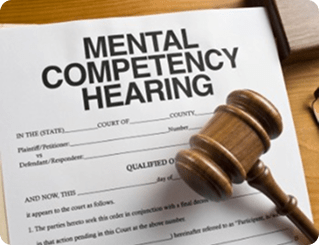 Competency to Stand Trial
Competency to Stand Trial, also known as Fitness to Stand Trial, is imperative for ensuring that a defendant can comprehend the nature and objective of the legal actions against them and actively cooperate with their defense attorney.
 Psychosexual Evaluations
Psychosexual evaluations of sex offenders incorporate a comprehensive risk assessment utilizing actuarial instruments and other research-supported risk and protective factors.
 Criminal Responsibility
Criminal responsibility or sanity evaluations are critical when a defendant’s mental state at the time of committing an offense is in question. These evaluations can be initiated by the court, defense, or prosecution to establish a clear understanding of the defendant’s mental condition during the crime.
 Independent Medical Exam
An Independent Medical Exam is conducted by a psychologist without prior involvement in the individual’s care, ensuring an objective assessment without a therapist-patient relationship.
 Miranda Rights & Confession Issues
The role of confessions and self-incriminating statements in criminal cases cannot be understated. Confessions are produced in about 50% of criminal cases, where suspects who provide self-incriminating statements are 26% more likely to be found guilty and convicted (Leo, 2006).
 Malingering and Deception
In the legal realm, psychological assessments can be compromised by malingering or deception, with individuals potentially presenting themselves dishonestly during interviews and tests to influence the outcome.
 Mitigating Factors
Mitigating factors consider the defendant’s mental state and historical mental disorders or psychological trauma, even when these do not qualify for an insanity defense, to argue for a reduced sentence. The contributions of evaluations and reports by experts like Dr. Steven Gaskell are vital for presenting such evidence.
 Guilty But Mentally Ill (GBMI)
Introduced first in Michigan in 1975, the GBMI verdict was proposed to diminish the success rate of insanity defenses, offering a compromise verdict that, while seemingly compassionate, subjects the defendant to the same penalties as a guilty verdict.
Latest Blog

Adam Walsh Act Immigration Psychological Evaluations
- Steven Gaskell
- April 14, 2025
Forensic psychologist Dr. Steven Gaskell performs a wide range of forensic psychological evaluation services including the psychosexual assessment of sex offenders and sex...

Child Pornography Offenders
- Steven Gaskell
- April 14, 2025
Forensic psychologist, Dr. Steven Gaskell performs comprehensive psychosexual assessments of child pornography offenders (child sexual abuse materials CSAM). These child...

Federal and State Standards for Competency to Stand Trial
- Steven Gaskell
- April 14, 2025
Dr. Steven Gaskell is a forensic psychologist who performs forensic psychological evaluations including the assessment of competency to stand trial....

Competency to Stand Trial Landmark Cases
- Steven Gaskell
- April 10, 2025
The Court ruled that an insane person (they meant an incompetent or unfit person) cannot be put to death. They...

Female Sex Offenders
- Steven Gaskell
- February 19, 2015
Dr. Steven Gaskell is a forensic psychologist who performs a wide range of forensic psychological services including the assessment of...

Sexually Violent Person Laws By State
- Steven Gaskell
- February 19, 2015
Forensic psychologist Dr. Steven Gaskell has completed over 3000 Forensic Psychological Evaluations including more than 1850 psychosexual evaluations, including Sexually...

SVP Landmark Cases
- Steven Gaskell
- February 19, 2015
Dr. Gaskell, forensic psychologist at Psycholegal Assessments, Inc., has completed over 1300 Forensic Psychological Evaluations including more than 750 sex...

False Confession Research
- Steven Gaskell
- February 19, 2015
Forensic psychologist Dr. Dr. Steven Gaskell provides several types of comprehensive forensic psychological evaluations to the courts, as well as...
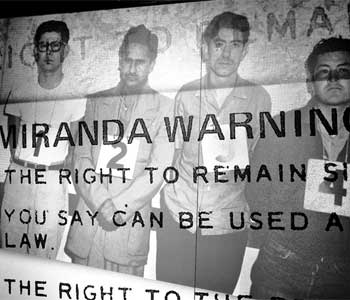
Miranda Waiver and ADHD
- Steven Gaskell
- February 19, 2015
Dr. Steven Gaskell, forensic psychologist at Psycholegal Assessments, Inc. provides several types of forensic psychological evaluations to the courts, as...
Video Conferencing Available!
Schedule your free video consultation today. HIPAA-compliant evaluations available across multiple states.
Video Conferencing Available!
Psychological evaluations are now able to be completed by HIPAA compliant video conferencing.
Request more details by filling out the form below.
Video Conferencing Available!
Psychological evaluations are now able to be completed by HIPAA compliant video conferencing.
Request more details by filling out the form below.